

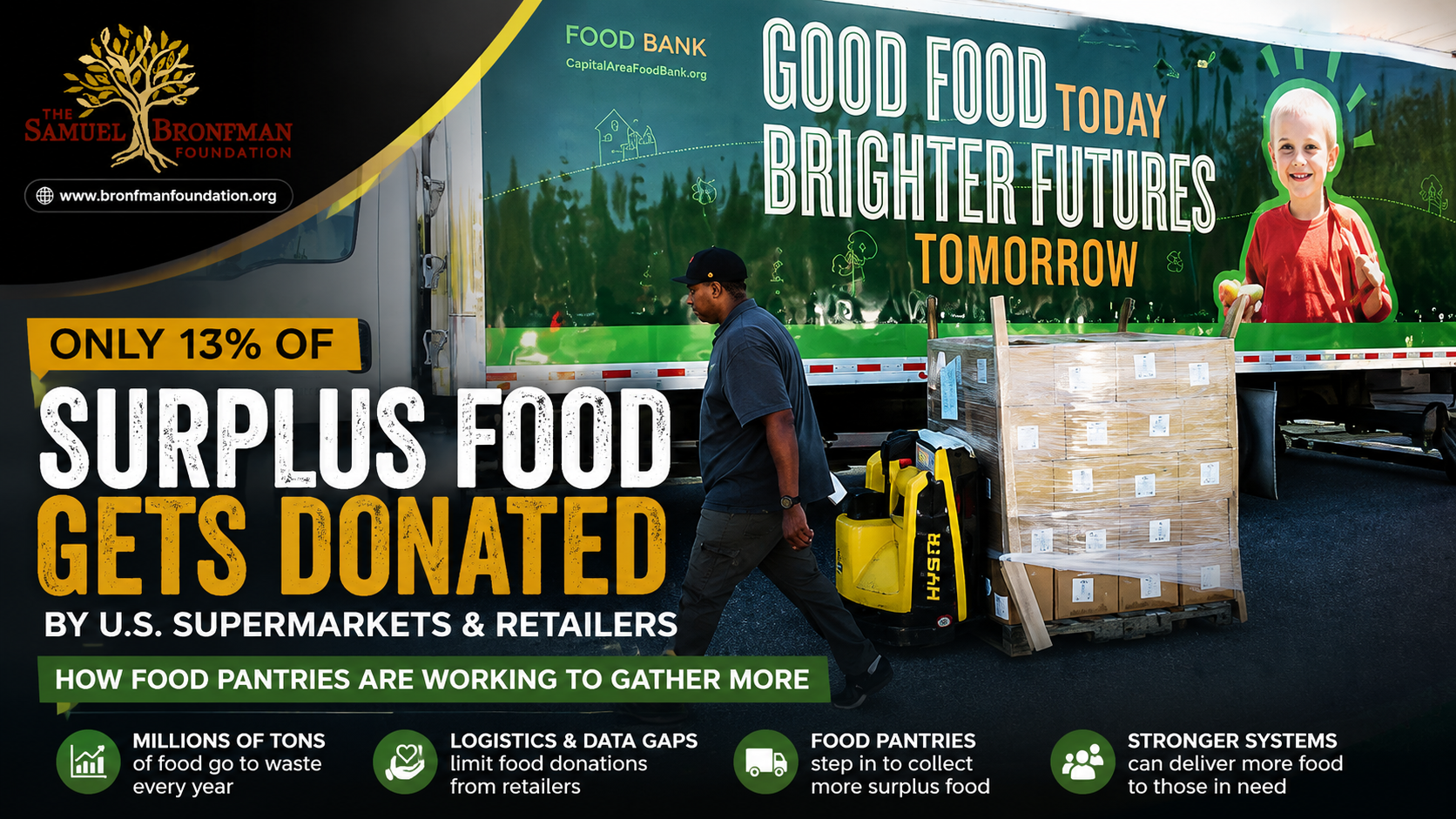
WASHINGTON — Millions of pounds of edible food could potentially help families facing food insecurity across the United States, yet only a small portion of available surplus reaches hunger-relief organizations. According to ReFED’s 2026 U.S. Food Waste Report, just under 13% of food that could be donated actually reaches donation channels, highlighting a major gap in the nation’s food recovery system.
One of the biggest obstacles to increasing surplus food donations is logistics. Supermarkets and other retailers do not always provide food banks with reliable information about how much food will be available, when it will be ready for collection, or what condition it will be in. As a result, food banks may struggle to determine the appropriate vehicle, staffing level and storage capacity needed for each pickup.
Food Pantries Take a Bigger Role
Food pantries are increasingly collecting donations directly from retailers rather than relying entirely on larger food banks. This approach can help because local pantries may be located closer to supermarkets and big-box stores.
Research cited by supply-chain scholar John Lowrey found that direct pantry pickups can substantially increase recovered food. At the best-performing store in one study, average monthly donations increased from 972 pounds across five pickups to 2,066 pounds across 16 pickups. However, the higher pickup frequency also created additional pressure on volunteers, vehicles and storage.
Unlike larger food banks, many food pantries operate with limited budgets, smaller storage facilities and volunteers using personal vehicles. Missed pickups can also discourage retailers from setting aside food if store managers are uncertain whether donations will actually be collected.
Better Data Could Increase Food Donations
Improving communication between retailers and hunger-relief organizations could therefore make a significant difference. Real-time information about the amount, type, location and availability of surplus food would allow food banks and pantries to plan pickups more efficiently.
ReFED estimates that the United States generated around 70 million tons of surplus food in 2024, representing approximately 29% of the country’s food supply. The organization valued that surplus at about $380 billion.
With such a large amount of food going unused, expanding surplus food donations is not simply a matter of convincing supermarkets to donate more. Stronger logistics, dependable staffing, adequate storage and better information-sharing will also be essential to getting more edible food from retailers to Americans who need it.
