

LILONGWE, Malawi – African countries are strengthening their collective fight against neglected tropical diseases (NTDs) as governments, health experts, and development partners assess the continent’s disease burden and the financial resources needed to achieve elimination targets by 2030.
The renewed push comes as Africa continues to carry a significant share of the world’s NTD burden. At the same time, international health financing is becoming increasingly uncertain.
As a result, African leaders are calling for stronger domestic financing, better disease surveillance, integrated health services, and closer cooperation between neighbouring countries.
Africa Faces a Major NTD Burden
Neglected tropical diseases are a diverse group of conditions that disproportionately affect poor and underserved communities.
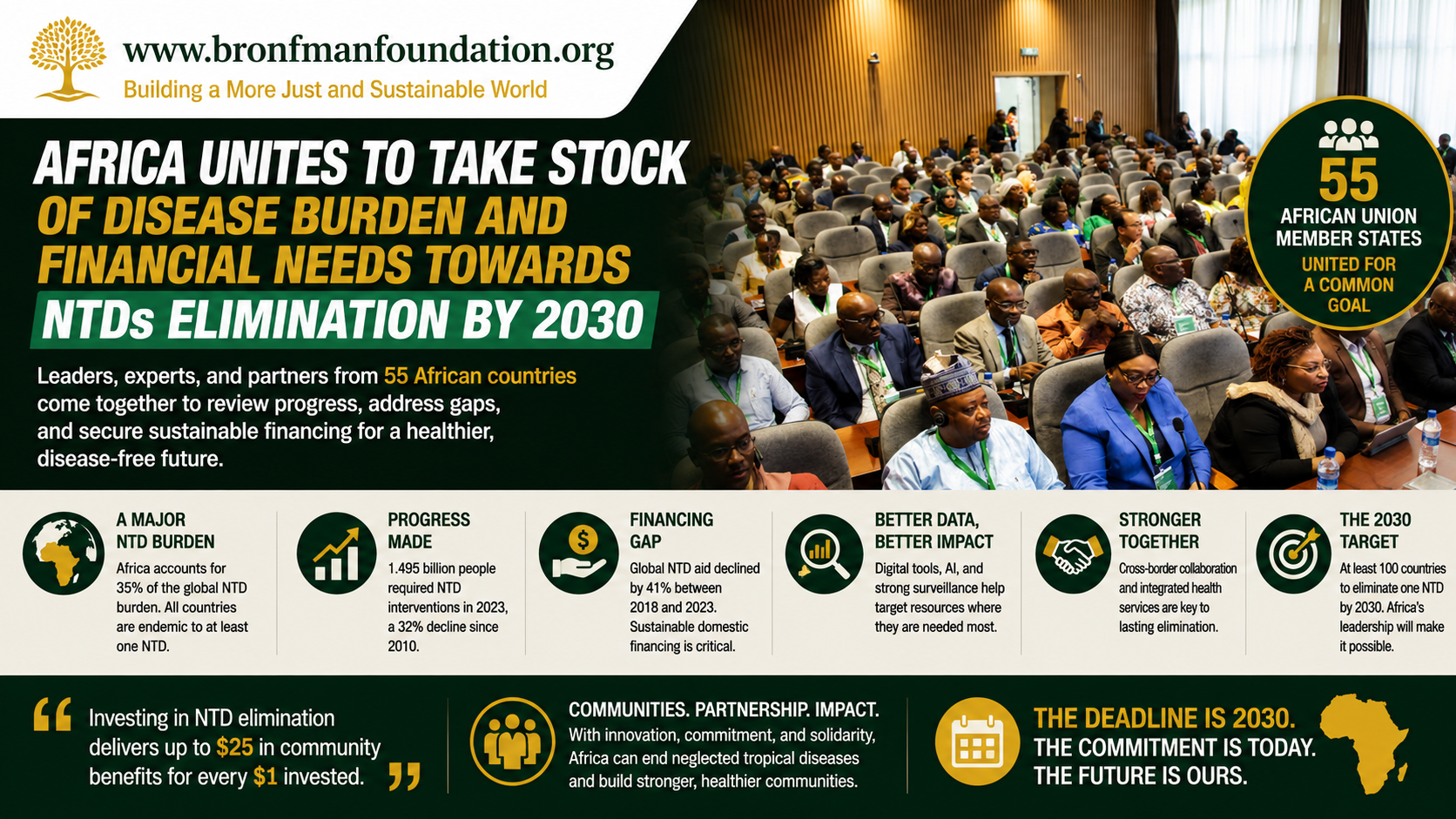
According to the African Union, around 1.495 billion people worldwide required interventions for at least one NTD in 2023. This represented a 32% decline compared with the 2010 baseline.
However, the burden remains substantial.
The African Region accounts for roughly 35% of people affected by NTDs. Moreover, 20 of the 21 diseases recognised as NTDs by WHO are present on the continent.
Therefore, accelerating progress in Africa will be essential to achieving global elimination targets.
55 African Union Member States Brought Together
A major step came through the 7th Annual Meeting of NTD Programme Managers in Africa, held from April 13 to 16, 2026, in Lilongwe, Malawi.
The meeting brought together NTD programme managers from all 55 African Union Member States, alongside health ministries, WHO teams, donors, technical experts, and implementing partners.
The gathering focused on reviewing progress, identifying remaining barriers, and aligning strategies for the final years before 2030.
Malawi hosted the meeting under the theme “Leveraging innovative tools and sustainable financing to advance NTD elimination in Africa.”
Financing Becomes a Critical Challenge
Money remains one of the biggest concerns.
Many national NTD programmes continue to depend heavily on external funding. Consequently, changes in donor priorities can quickly disrupt treatment campaigns, disease surveys, and surveillance programmes.
WHO reported that global NTD aid declined by 41% between 2018 and 2023.
This situation has increased calls for African governments to build more sustainable domestic financing models.
Options discussed include dedicated national budget lines, health insurance mechanisms, and innovative financing arrangements.
The goal is to ensure that NTD programmes can continue even when international funding declines.
Millions Still Need NTD Interventions
Despite the challenges, significant progress has already been achieved.
WHO reported that around 1.4 billion people worldwide required NTD interventions in 2024, representing a 36% decline compared with 2010.
Furthermore, 58 countries had eliminated at least one NTD as of early 2026.
However, the global target is much more ambitious.
The WHO roadmap aims for at least 100 countries to eliminate one NTD by 2030.
Therefore, the next four years will be crucial.
Africa Looks Beyond Traditional Funding
African health leaders are increasingly looking beyond conventional donor-supported programmes.
Domestic ownership has become a central part of the continent’s strategy.
The African Union’s Continental Framework on the Control and Elimination of NTDs calls for stronger national programmes, community-based interventions, better prevention, vector control, improved water and sanitation, and greater mobilisation of domestic resources.
This approach also recognises that eliminating NTDs requires more than medicine.
Clean water, sanitation, education, primary health care, surveillance, and community participation are equally important.
Better Data Could Accelerate Elimination
Another priority is improving health data.
Countries need accurate information to identify communities where transmission continues. Reliable data also helps governments determine where limited financial resources should be directed.
For this reason, the 2026 meeting placed greater attention on digital tools, dashboards, and AI-enabled analytics.
These technologies could improve planning, reporting, disease mapping, and surveillance.
However, technology must be supported by strong national health information systems and trained health workers.
Cross-Border Cooperation Is Essential
NTDs do not stop at national borders.
People regularly travel between countries for work, trade, family, and migration. Disease vectors can also move across neighbouring regions.
Therefore, eliminating a disease in one country may not be enough if transmission continues across the border.
African governments are consequently strengthening cross-border data sharing, coordinated surveillance, and joint planning.
WHO has also emphasised stronger cross-border collaboration and integrated approaches as essential for eliminating both malaria and NTDs.
Investment in NTD Elimination Can Deliver Major Returns
Funding NTD programmes can also produce significant economic benefits.
WHO’s ESPEN Strategy 2026–2030 estimates that preventive chemotherapy NTD interventions cost approximately $35–$60 per disability-adjusted life year, although the actual figure varies by disease and intervention.
Furthermore, the strategy estimates that NTD programmes can generate up to $25 in community benefits for every $1 invested.
The new ESPEN strategy outlines approximately $64 million in investment needs for 2026–2030 to accelerate elimination of preventive-chemotherapy NTDs across the WHO African Region.
These diseases include lymphatic filariasis, onchocerciasis, schistosomiasis, soil-transmitted helminthiases, and trachoma.
Communities Remain at the Centre
While governments and international organisations provide policies and resources, communities remain essential to successful elimination.
Community health workers and volunteers often distribute medicines, identify cases, support surveillance, and educate families.
This is especially important in remote areas where access to formal health facilities remains limited.
WHO has therefore called for governments, health workers, communities, civil society, donors, and the private sector to work together to protect progress and reach populations that remain underserved.
Race Toward the 2030 NTD Targets
With 2030 approaching, Africa’s fight against neglected tropical diseases has entered a decisive phase.
Progress is visible, but financing shortages, weak surveillance systems, cross-border transmission, climate pressures, and gaps in primary health care could threaten previous achievements.
For African countries, the challenge is now to transform political commitments into sustainable national programmes.
Stronger domestic investment, reliable data, regional cooperation, innovation, and community participation will determine whether the continent can achieve its NTD elimination goals by 2030.
