

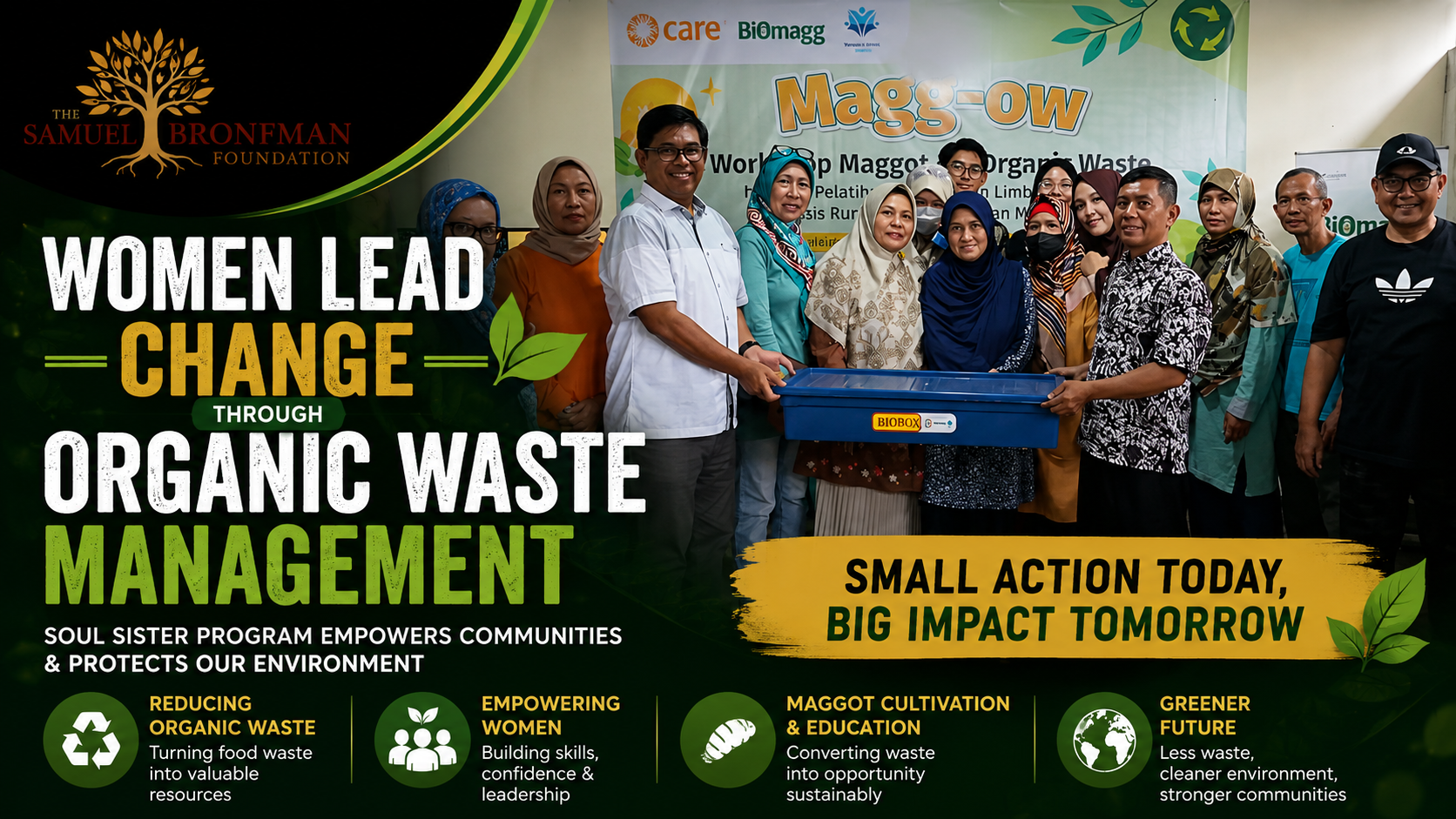
Women Take the Lead in Organic Waste Management
Organic waste management is becoming an important environmental and economic issue in Indonesia. CARE Indonesia says the country generates at least 69.9 million tons of waste annually, with around 40% consisting of food waste that ultimately ends up in landfills. The figures cited by CARE are based on 2023 data from Indonesia’s Ministry of Environment and Forestry (KLHK).
When organic waste accumulates in landfills, its decomposition can produce methane, a powerful greenhouse gas that contributes to climate change. The problem has encouraged initiatives that focus not only on reducing waste but also on turning discarded organic material into useful resources.
Soul Sister Supports Women in Managing Organic Waste
Through its Soul Sister for Managing Organic Waste initiative, CARE Indonesia works with partners to support women’s groups across Indonesia in processing organic waste. The program emphasizes women’s role as agents of change in addressing environmental and social challenges.
One of the approaches involves providing education about organic waste processing and maggot cultivation. Black soldier fly larvae can consume certain forms of organic waste and turn material that might otherwise be discarded into resources with potential value. CARE says these activities can contribute to waste reduction while also supporting household economies.
Turning Household Waste Into Valuable Resources
The initiative demonstrates how organic waste management can extend beyond simply disposing of household scraps. By giving women practical knowledge and supporting community-based waste processing, organic material can instead become part of a more productive local system.
CARE Indonesia also highlights a broader issue: women can be disproportionately affected by environmental damage while having limited access to resources and decision-making. At the same time, women can play an important role in developing solutions for environmental conservation and public health.
Building a Cleaner and Greener Future
Better organic waste management can therefore provide benefits on several fronts. Reducing the amount of food waste entering landfills can help limit environmental pollution, while community processing can create opportunities to generate value from materials previously regarded as waste.
Through the Soul Sister initiative, CARE Indonesia aims to strengthen women’s participation in this process. The program illustrates how environmental action, women’s empowerment and household economic opportunities can work together toward cleaner communities and a more sustainable future.
